
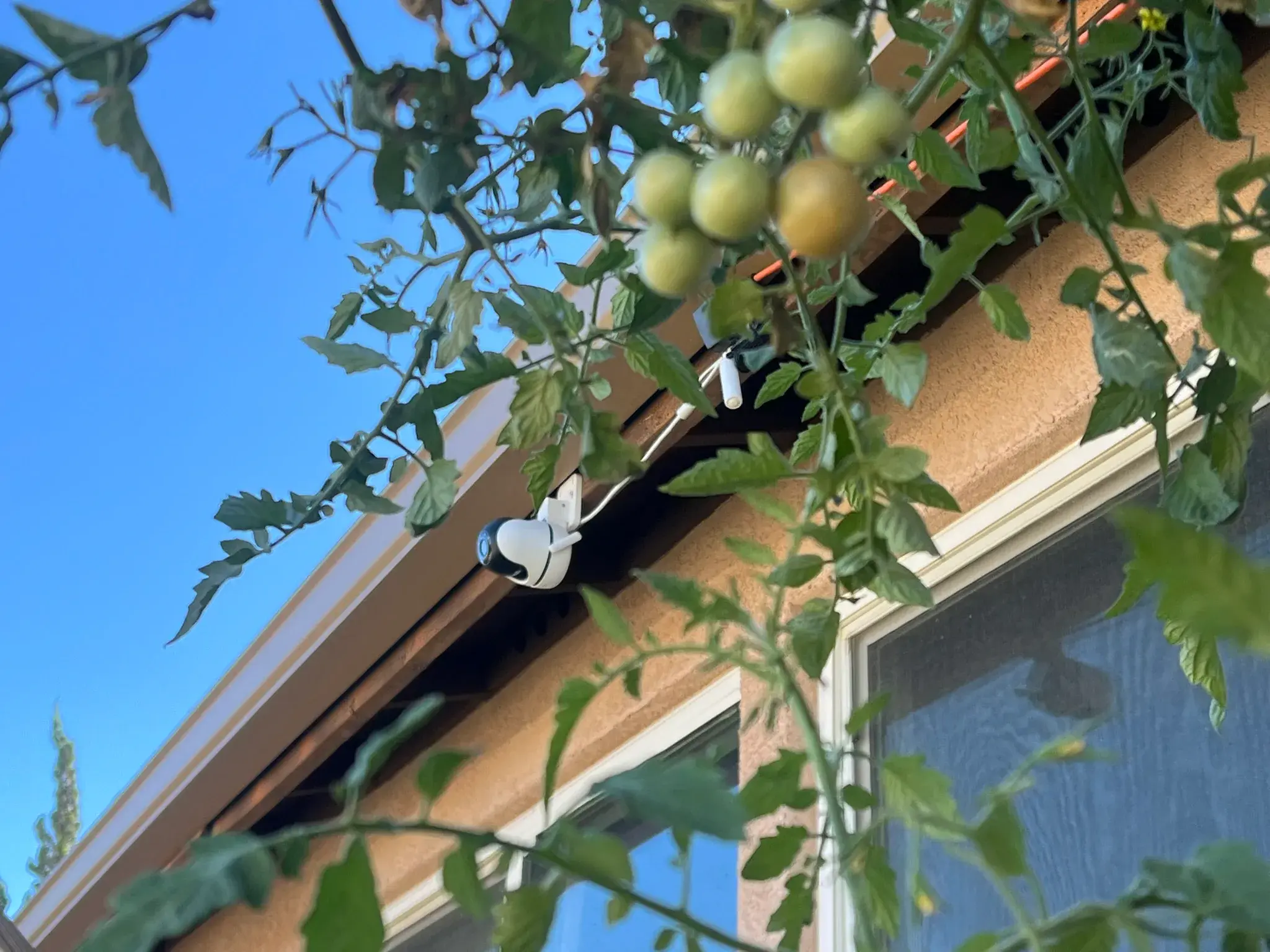
Yes for broad changes. No for every detail.
In this setup, a 2K camera gives us repeat views of broad growth, visible fruit-color changes, a plant leaning or collapsing, and differences across a bed. It cannot replace a close-up for tiny insects, faint leaf spots, hidden fruit, or an exact tomato count.
“Is 2K good enough?” depends on what you want to notice and how far away the camera sits. A wide view may help you spot a bed that looks different. It cannot explain a tiny mark on one leaf.
For GardenSeer research, the value is in a consistent record: an earlier image, a later image, and an honest note about what each can show. The 2K label alone tells us much less.
Decide what you need to see first
A camera is useful when its images can help answer a question you chose ahead of time. For a wide garden view, those questions are usually about changes you can see across the scene:
- Has the canopy expanded or collapsed since a comparable view?
- Has visible ripe color appeared or increased?
- Is a bed visibly obstructed, damaged, or unusually sparse?
- Did a camera shift or lighting change invalidate comparison?
- Which area needs a closer human look?
“I cannot tell from this photo” is a valid answer. Leaves may hide fruit, glare may erase detail, and a tiny subject may occupy only a few pixels. More confidence cannot restore something the camera never captured.
What we learned from one camera in one garden
The founder's Tapo C520WS is roughly 10–12 feet from its garden views. TP-Link lists a maximum resolution of 2K QHD, or 4MP at 2560 × 1440 pixels. We have a working local route for scheduled still images from this installed camera.
We can describe what this camera shows in this position. We cannot assume a different 2K camera, lens, hardware version, firmware, or mounting spot will behave the same way. Other models need their own tests before we could support them.
Specification source: TP-Link Tapo C520WS V2 downloads and datasheet. GardenSeer is not endorsed by TP-Link, and no purchase link is active.
What this overview helps us see
| Garden question | What it can show now | Why |
|---|---|---|
| Canopy growth | Useful | Large shapes and occupied space remain visible. |
| Visible fruit-color change | Conditional | Useful when fruit is visible, large enough, and comparably lit. |
| Wilting or collapse | Useful | Broad posture and silhouette changes can be reviewable. |
| Bed-level comparison | Conditional | Framing and capture conditions must remain comparable. |
| Tiny insects or subtle spots | Weak | The subject occupies too little of a wide overview frame. |
| Exact fruit count or identity | Unsupported | Occlusion, overlap, distance, and changing views break exactness. |
These are judgments about this installed view, not accuracy scores for 2K cameras. The side-by-side resolution test has not happened yet; we will revise the table when it gives us measured results.
More pixels cannot fix a poor view
A 2560 × 1440 image has that many pixels across the whole frame. If a tomato is far away, it still takes up only a small part of them. A wider angle or greater distance can wipe out much of the benefit of higher resolution.
Placement
Distance and angle decide whether the plant is visible at all.
Repeatability
A stable view makes plant change easier to separate from camera movement.
Image pipeline
Focus, light, motion, compression, and timing all affect detail.
Coverage
Leaves can hide fruit at every resolution.
For a record you compare over time, a clear 2K view from the same spot may be more useful than a sharper image from a changing angle. Extra pixels can help with cropping, but not with hidden fruit or a view that no longer matches yesterday's.
What to check before choosing an affordable camera
You may not need an expensive camera for a recurring overview. What matters is whether the exact unit works where you plan to put it and gives you the images you need. Look beyond the resolution claim:
- A stable mounting position with the required garden coverage.
- Reliable access to full-resolution stills or a usable stream.
- Power, network, and weather protection appropriate to the installation.
- Consistent focus and exposure in representative garden conditions.
- A recovery path when capture, power, or connectivity fails.
- The exact model, region, hardware revision, and firmware you tested.
A product listing or a familiar brand name cannot tell you whether a particular revision works in your garden. This field note is not a recommendation to buy the founder's camera or any other model.
Keep your phone for the close-ups
A mounted camera makes repeat views easier. A phone lets you walk around a plant, look behind leaves, and photograph a small area the fixed camera cannot see.
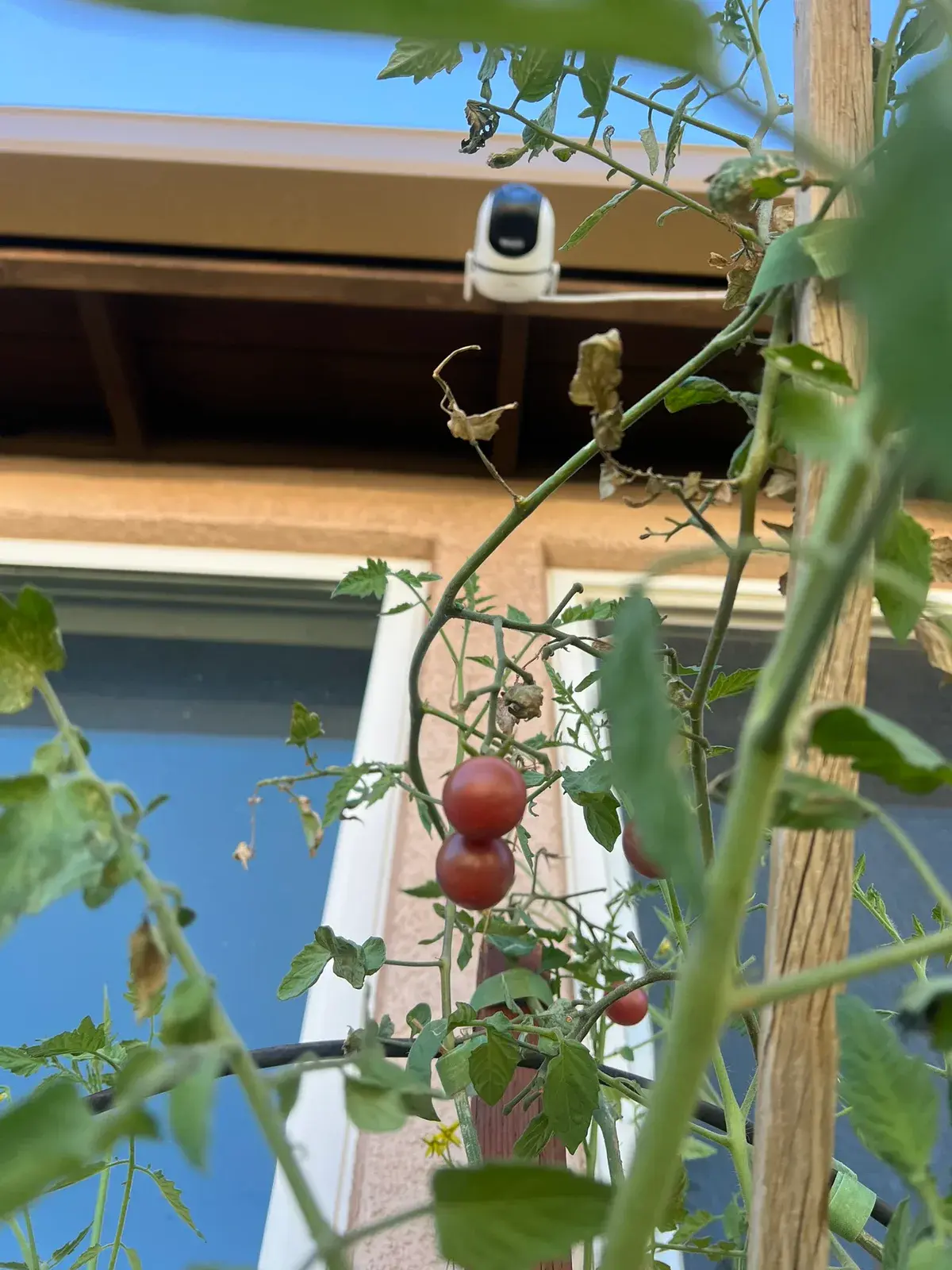
The two views can complement each other: a steady overview for comparison and a phone photo when something needs a closer look. GardenSeer research does not depend on everyone owning a mounted camera; phone photos can also build a useful record.
Next: compare 2K and 1080p on the same questions
Our planned follow-up, GS-EXP-006, will compare original 2K images with the same images reduced to 1080p. Reviewers will answer garden questions chosen in advance without knowing which version they are seeing.
- Choose representative frames.Use different light, distances, foliage, movement, and visibility conditions.
- Freeze the transforms.Make the 1080p versions the same way each time, without hand-tuning the best-looking examples.
- Ask task-level questions.Record answers, disagreement, uncertainty, and “cannot tell” responses.
- Publish failures with successes.Report where either resolution fails, not just where 2K helps.
We do not have a measured result from that comparison yet. It may show that 2K is needed for a particular question, that even 2K is not enough, or that 1080p gives the same useful answer. Each outcome would help us judge when extra resolution is worth it.
Choose the view before the pixel count.
This 2K setup has been useful for broad garden comparisons. Its limits matter just as much: keep the view steady, say when a photo cannot answer the question, and move closer when you need detail.