
Why I Put a Camera Over My Garden
I kept wondering what had changed since the last time I looked at the garden. A camera gave me a steadier record, not instant answers.
About this note: This is the story of a research setup in my garden. Ripening alerts, plant-stress detection, and camera-guided watering are questions we are testing, not GardenSeer features you can use today.
Were those tomatoes that red yesterday? Had that branch been leaning all week? After a hot afternoon, did the plant look different the next morning? I was already asking questions like these while standing in the garden. I wanted a better way to compare what I saw over time.
Memory can blur one day into another. Phone photos help, but when I take them from different spots and angles, it is hard to tell whether the plant changed or the picture did. I needed a view I could return to.
Start with a view you can repeat
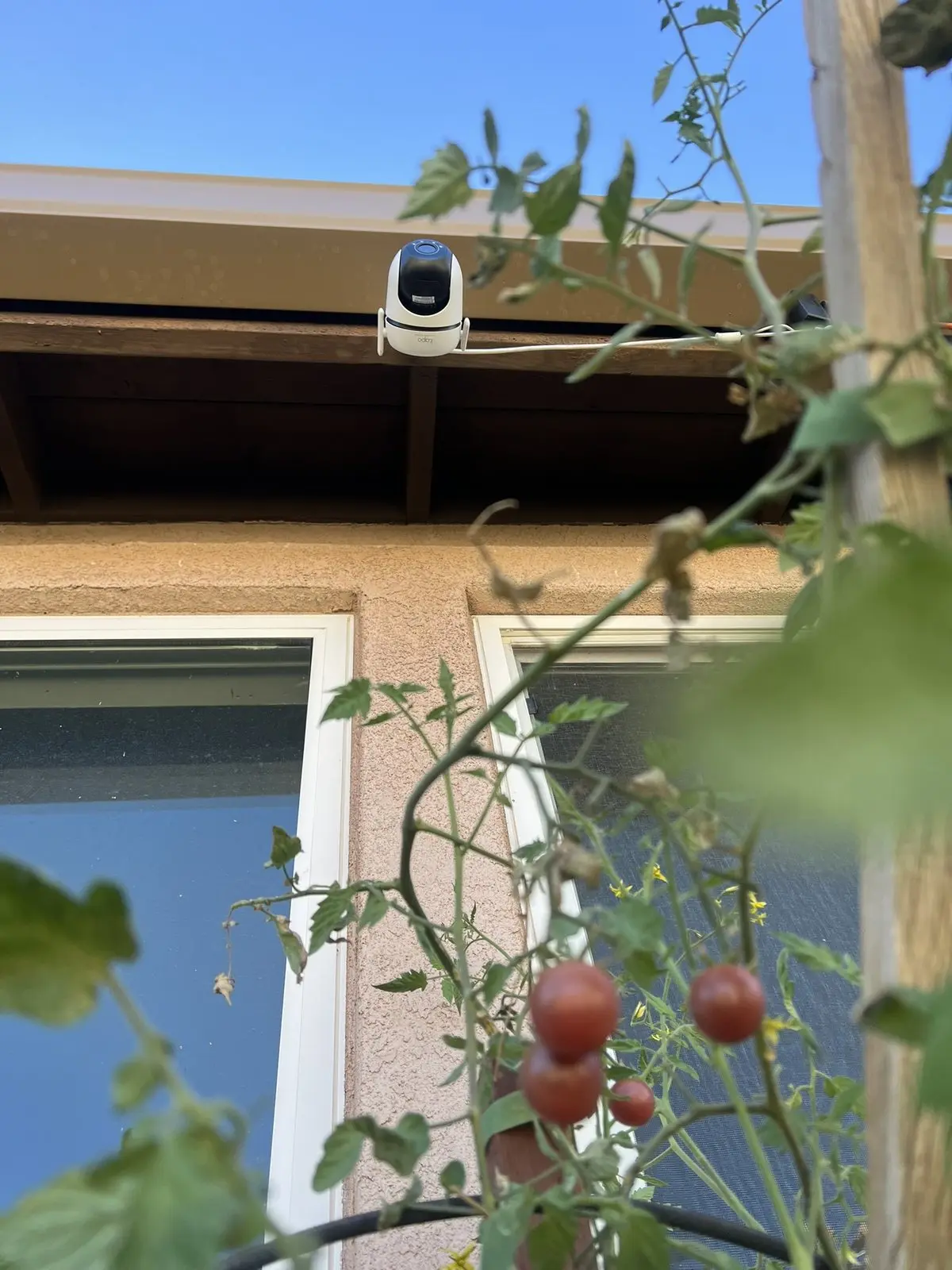
I mounted an outdoor camera above the garden to get a familiar view each day. Placement mattered more than camera tricks. The plants needed to be visible, private areas needed to stay out of frame, and I needed safe access to the camera with dependable power and network signal.
Even a good position has blind spots. Leaves hide fruit, bright sky can wash out detail, and a pan-and-tilt camera can drift from yesterday's angle. A repeatable, imperfect view is still useful if I know what it shows—and what it misses.
The GardenSeer research library gathers the field notes and practical tests that grew from this setup.
A photo shows what was visible, not why it happened
If a leaf looks droopy in one image, I can record that observation. I cannot tell from the image alone whether it needed water. Redder-looking fruit may be changing color, but a picture does not tell me when to harvest it. A lower-looking stem might reflect wind, fruit weight, pruning, or a shifted camera. The picture gives me something to check, not a diagnosis.
The camera saves a view. I still have to decide what that view can honestly tell me.
That difference matters to GardenSeer. What we saw, what we think it means, what we expect next, and what actually happened are separate parts of the record. Daily images help, but they do not fill in a missed day, reveal hidden fruit, or show every change in weather or garden care between photos.
First, I had to get the video onto a computer
Once the camera was mounted, plant recognition was not the first challenge. I needed a reliable way to reach its live view from a computer on the same network. The Tapo app brought the camera online; regular image capture needed a dependable local connection.
The Tapo C520WS supports two documented local options. RTSP carries the live video. ONVIF helps compatible software find the camera and use supported functions. Neither gives another program every feature in the Tapo app.
That gave the computer a way to see the camera without claiming more than the connection can do. I wrote out the steps inHow to Connect a Tapo C520WS to Your Computer, including the separate Camera Account, local IP address, stream choices, and security checks.
Daily images made smaller questions possible
I did not need to study nonstop video to ask whether the garden looked different. A daily image is easier to compare with yesterday's and to mark up for review. It also makes gaps obvious: a missing photo, a changed angle, or very different light cannot quietly pass for plant growth.
A steady view lets me ask narrower questions. When did a tomato first show more color? When did a plant first appear to lean? Would a message about a visible change have helped me do anything differently? Sometimes the answer may be no, and that is useful to learn before sending alerts to anyone.
The process is simple: write down the question, save the images, make an interpretation before knowing the outcome, then compare. If leaves blocked the view or the evidence was weak, the record should say that too.
Seeing a change is a long way from controlling water
It is tempting to jump from “the camera sees a change” to “the camera should water the plant.” That would skip too much. We first need to learn how often an observation is wrong, what it misses, and whether a notification would help a gardener make a better decision.
Camera images do not control GardenSeer's initial watering policy. Any future water control needs its own run limits, a manual stop, clear behavior during outages, and a way to verify what happened. A proposed policy must first run in shadow mode, where it records what it would have done without turning on water.
The camera work supports research; it is not a camera-product launch. GardenSeer's current public direction is a simpler outdoor watering experience. Product in development. Final design and availability may change.
What the camera changed
The camera did not tell me what my garden needed. It gave me a more consistent way to see what changed, ask a smaller question, and check the answer later. That is enough for useful research. Automation can wait until the evidence supports it.
For now, the best result is simple: I can return to the same view and see what was actually there.