
Why a simple color check failed
Tomatoes often change color as they ripen, so an early test looked for more red and orange in repeat garden photos. It found those colors. It could not tell whether they came from tomatoes.
Marigolds appeared in the same views. From the camera's distance, a small orange flower could look much like part of a tomato. Bright wood, dry leaves, and damaged fruit made the picture harder to read.
We were finding “orange in the garden.” We needed “orange on a likely tomato.”
Requiring a deeper red might have screened out some flowers, but it could also miss the first color change on a tomato—the moment we wanted to study.
We kept the lookalikes in the test
We reviewed 18 private camera images by hand and drew boundaries around 190 objects. Those boundaries are called masks. We labeled likely tomatoes, warm-colored lookalikes, and objects we could not identify confidently:
Researchers call a convincing lookalike a hard negative. The 56 warm-colored non-tomato objects gave the test examples of what not to call fruit. We kept them visible in the evaluation instead of hiding them in a general background label.
We also kept eight unclear objects marked as unclear. They remain in the review record but were not used to train the detector or score ripening. A tidy label would not have made the underlying image any more certain.
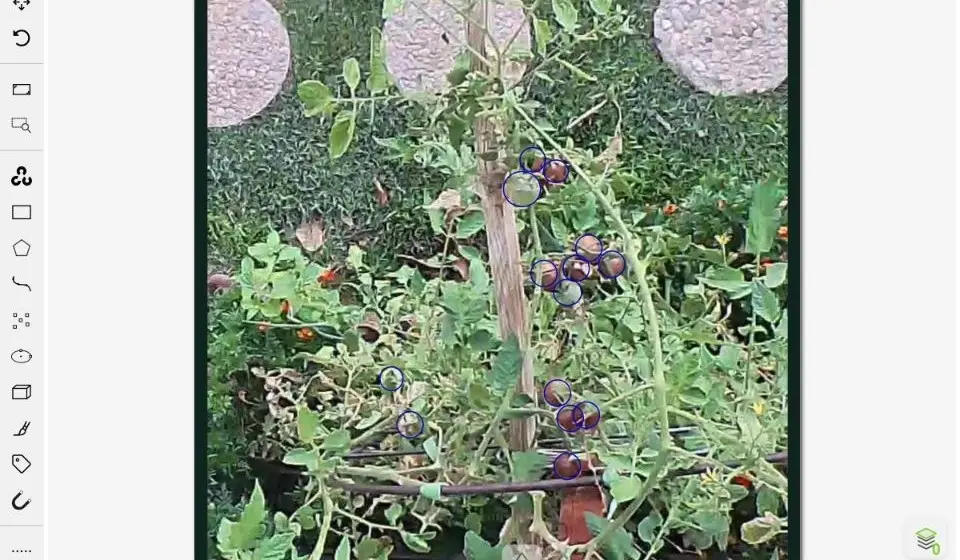
Measure color on the tomato, not around it
A simple rectangle around a tomato also includes whatever is next to it—leaves, stems, flowers, and shadow. A hand-reviewed mask follows the visible fruit more closely.
We changed the color check to look only inside confirmed tomato masks. Unclear objects stayed out. An orange flower near a vine no longer counted as a ripening tomato just because it was nearby.
This did not solve everything. Shade can hide a tomato's color, damage can change its appearance, and two camera views may show the same fruit. But at least the measurement now referred to the fruit we meant to study.
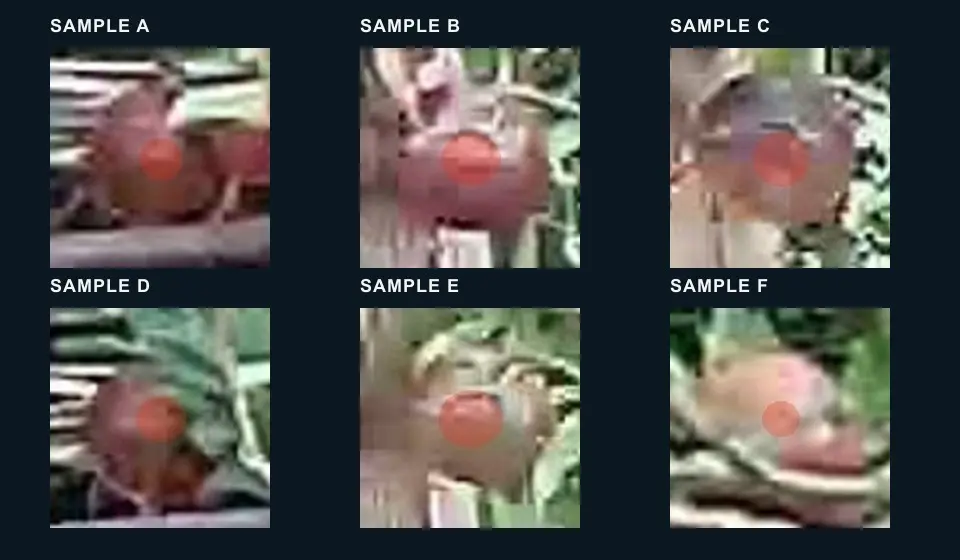
A useful signal, but not an accurate tomato counter
The detector still missed too many tomatoes for exact counts. On four later images held back from training, box precision was 46.2% and recall was 31.6% at the threshold chosen before evaluation. The stricter mask scores were lower.
A broader question looked more promising: had visible ripe color appeared in likely tomato regions? The two earlier held-out views did not trigger that event; the two later views did. That matched the expected result for all four frames.
Four matching frames do not mean 100% accuracy.They cover only two dates, and the later views probably show the same fruit. We need fresh images before considering notifications.
We have not proved that marigolds can no longer fool the system. The useful change is in the method: find likely tomatoes, check their color, compare with an earlier usable image, and save both views for a person to review.
The garden's distractions belong in the test
A system trained only on easy pictures of tomatoes has not learned the garden it will actually see. Real views include flowers, ties, stakes, glare, soil, damaged fruit, dense leaves, and objects nobody can identify with confidence from one photo.
A convincing orange lookalike can teach us more than another clear red tomato. Keeping those examples in the test helps reveal how the method behaves in a real garden scene.
For now, a possible change belongs in a private review record, not in an instruction to the gardener:
Notifications are still off. Fresh photos must show us how often the method sounds a false alarm and how often it misses a visible change.
Companion flowers were not the problem. Our question was.
Marigolds belong in the garden. The test needed to account for them, not wish them away.
Any camera alert about color or shape needs to know what object it is looking at, what an earlier photo showed, and when the view is too uncertain to call. A confident-sounding mistake would be worse than an honest “we cannot tell.”
Read the complete ripening shadow test